










How does charging to 100% affect EV battery health?
If you park in a garage or use a timer to precondition the battery before driving in winter, you're doing something akin to "maintenance," but it's far less demanding than changing oil. It may be necessary to periodically check coolant levels if you have an older EV with a liquid-cooled battery, but this is a small task in comparison to engine maintenance. However, the average rate of degradation is currently 1 to 2 percent annually, which means that you may lose 10 to 20 percent of range after ten years.
That is not an abrupt failure, but a gradual one. Additionally, battery deterioration is a real phenomenon that occurs gradually over time. Charging practices also matter. Nevertheless, most drivers can tolerate the difference. The state of charge merits consideration as well. With proper care, you can expect your battery to last as long as you own the car, and often longer. Climate has a minor impact; cars in continuously hot areas deteriorate a little more quickly than those in milder areas.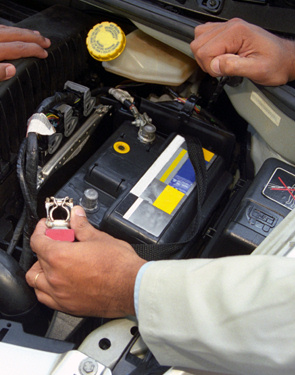 Although regular daily use throughout the entire range is perfectly acceptable due to built-in software buffers that protect the cells, keeping the battery constantly at full or almost empty for extended periods of time adds needless stress. A battery's ability to age gracefully depends on a number of factors. For this reason, automakers incorporate charge limit settings into their dash menus and apps. Therefore, it makes more sense to leave your car at about 50% or 60% rather than topping it off if you know it will be idle for https://autopowercare.com a week.
The double whammy of high charge and high state of charge for prolonged periods of time is what you really want to avoid. They're not attempting to scare you; rather, they're providing you with an easy-to-use tool to optimize the health of your battery. The cells' internal chemical aging is accelerated by that combination. Serious physical damage is the most frequent situation. Now, when would a complete replacement still be required? The safety risks become critical if a battery pack has sustained a major water intrusion or been punctured in an accident.
The only reasonable course of action at that point is a complete replacement. Piecemeal repairs are useless if a battery has been used for hundreds of thousands of miles and each module is getting close to the end of its useful life. In those situations, it is just not prudent to repair a compromised structure. Extreme age is another scenario. Although it's a frequent concern, a complete swap is rarely required over the course of a normal ownership period.
Related products

Pigments 125ml

IDevelop - Cream Developer 1000m

Pigment Direct

Pigment Acid

Pigment Toner 100ml



Contact Info
- Address:
- Phone: 966568852280
- Email: Fuel.com.co@gmail.com